
Feeding a Dog With Pancreatitis
A practical overview of low-fat feeding, lean proteins, and veterinary oversight for dogs managing pancreatitis.
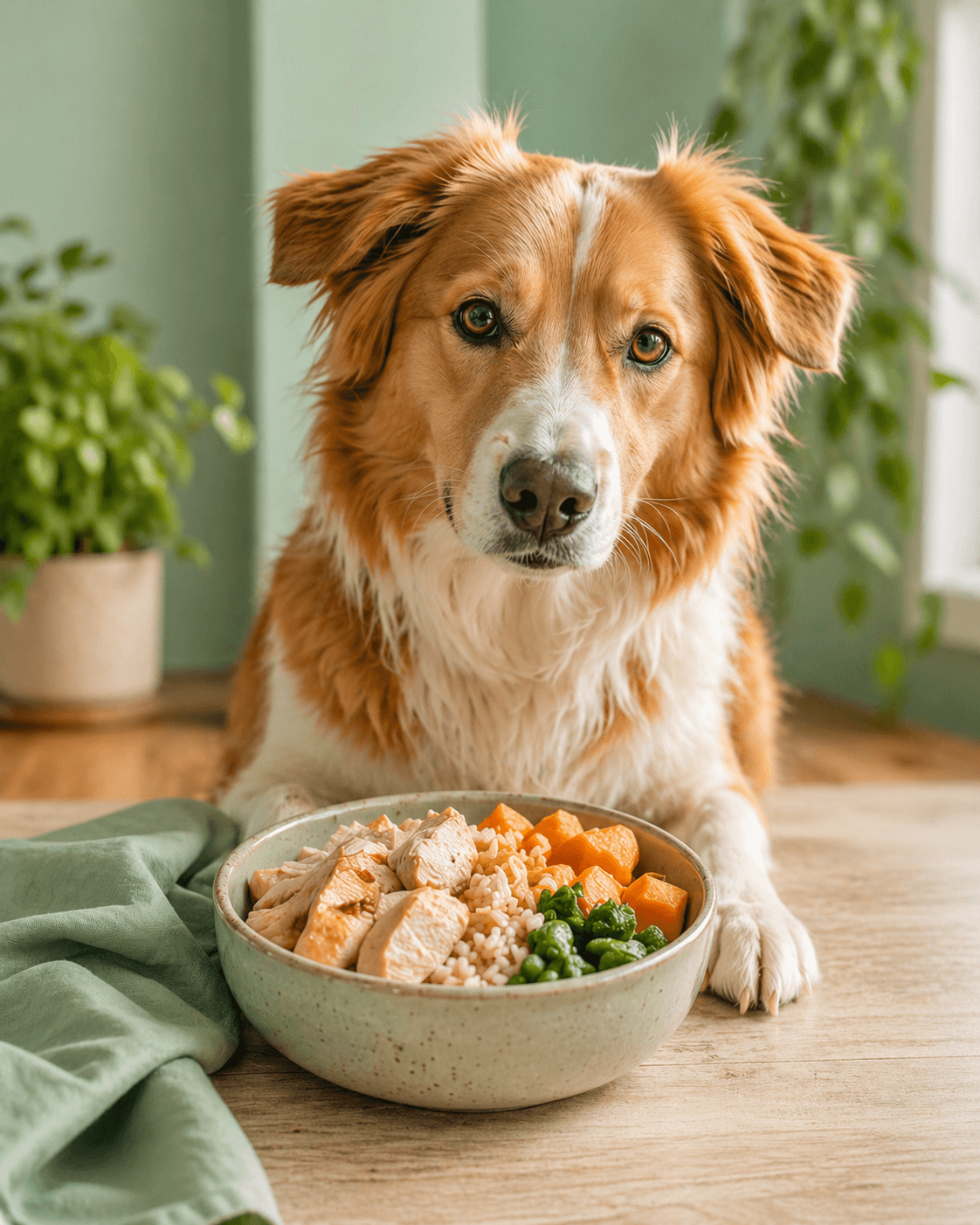
This article is educational and scoped to healthy adult dogs on maintenance diets. It is not veterinary advice, diagnosis, treatment, or recipe approval.
Feeding a Dog With Pancreatitis: What Actually Helps
If you're reading this, you've probably already been through the vet visits, the bloodwork, the scary word "pancreatitis" being said out loud. Maybe your dog is recovering from an acute episode, or maybe you've been managing a chronic case for months. Either way, you know this condition changes how you have to think about food.
The good news is that diet is one of the most powerful tools you have. And once you understand what the pancreas is actually doing, the nutritional approach starts to make a lot of sense.
What Is Pancreatitis, and Why Does It Happen?
The pancreas is a small organ that sits near the stomach and small intestine. Its job is to produce digestive enzymes, particularly lipase, which breaks down fat. When the pancreas is healthy, those enzymes only activate once they reach the small intestine. In a dog with pancreatitis, those enzymes activate too early, essentially beginning to digest the pancreas itself. That's what causes the inflammation, the pain, and the cascade of symptoms: vomiting, lethargy, a hunched posture, and loss of appetite.
Pancreatitis can be acute (sudden and severe) or chronic (a lower-grade, ongoing inflammation that flares periodically). Both need to be taken seriously.
As for why so many dogs develop it, the honest answer is that it's multifactorial. High-fat meals are a well-known trigger, which is why vets see spikes after holidays when dogs get into table scraps or get fed a rich treat as a one-off "treat." But pancreatitis also shows up in dogs with hypothyroidism, Cushing's disease, obesity, diabetes, and even as a side effect of certain medications. Some breeds, like Miniature Schnauzers and Cocker Spaniels, are genetically predisposed to it. And in many cases, there's no single identifiable cause at all.
What this means practically is that managing pancreatitis through diet is not just about avoiding one bad ingredient. It's about giving the pancreas less to do at every meal, consistently, over the long term.
The Fat Question
Fat is the nutrient that puts the most demand on the pancreas. When dietary fat enters the digestive system, it triggers the release of a hormone called cholecystokinin (CCK), which signals the pancreas to release its enzymes. The more fat in a meal, the bigger that signal. For a healthy pancreas, this is routine. For an inflamed one, it can trigger or worsen a flare.
This is why low-fat feeding is the cornerstone of pancreatitis management. Veterinary guidance generally points to keeping fat below 18% on a dry matter basis for initial management, with more severe or hyperlipidemic cases often requiring under 10% fat. In practical terms when home-cooking, many nutritionists use a target of under 20g of fat per 1,000 kcal of metabolizable energy as a reasonable working threshold.
It's also worth knowing that excess dietary protein stimulates pancreatic secretions too, so while protein is necessary and important, you're not trying to pile it on either. Adequate protein, low fat, and high digestibility are the three things you're optimizing for.
One thing worth knowing: the science on exactly how much fat reduction is necessary is still evolving. A 2024 paper in the Journal of the American Veterinary Medical Association noted that some studies in healthy dogs haven't shown a direct link between dietary fat and pancreatic biomarkers of injury, and researchers acknowledge that what's optimal varies dog to dog. Your vet may tailor thresholds based on whether your dog shows elevated triglycerides or not. The general principle holds. The exact number is something to calibrate with your vet.
The Best Proteins for Dogs With Pancreatitis
This is where things get more nuanced, especially if your dog has both pancreatitis and food allergies or intolerances. The standard advice is "lean protein," and the most commonly cited examples are skinless chicken breast and turkey breast. Both are genuinely excellent choices: very low in fat, highly digestible, and easy to source.
But many dogs with pancreatitis have complicated food histories. Digestive conditions and food sensitivities often co-occur. If your dog can't tolerate chicken, turkey, beef, or pork, the list can start to feel short. Here's a more complete picture:
White Fish (Cod, Haddock, Tilapia)
White fish is one of the best overlooked proteins for pancreatitis management. Cod and haddock in particular are very lean, easy to digest, and tend to be well-tolerated by dogs with protein sensitivities to common meats. They're also a natural source of omega-3 fatty acids, which have anti-inflammatory properties that may actually support pancreatic recovery rather than hinder it. If your dog has poultry allergies, white fish is often the first alternative worth trying.
Avoid oily fish like salmon and sardines as a primary protein here. They're wonderful for healthy dogs but carry a much higher fat content, which defeats the purpose.
Kangaroo
This one surprises a lot of dog owners, but kangaroo is one of the most genuinely useful proteins for dogs who've run out of common options. It's naturally one of the leanest meats available, typically containing only 1 to 3% fat, which is well within what pancreatitis diets require. Because it's so rarely used in commercial dog food, it's considered a true novel protein: most allergic dogs have never been exposed to it, which makes it an excellent candidate for both elimination diets and long-term feeding in sensitive dogs.
Beyond its fat profile, kangaroo is rich in iron, zinc, omega-3 fatty acids, and B vitamins including B12. It's also highly digestible, which matters a lot when you're trying to reduce the overall workload on the digestive system. If you're home-cooking and your dog has exhausted the usual proteins, kangaroo is absolutely worth exploring with your vet or a veterinary nutritionist.
Rabbit
Rabbit is another lean, novel protein that flies under the radar. It has a mild flavour profile, is easy to digest, and tends to have a lower fat content than most red meats. Like kangaroo, it's rarely found in standard commercial foods, which makes it genuinely novel for most dogs with histories of protein sensitivity.
Egg Whites
Egg whites are a useful supplementary protein for pancreatitis diets. They have an extremely high biological value (meaning the body uses the protein very efficiently), they're essentially fat-free, and they're easy to add to a home-cooked meal. The yolk is where almost all the fat in an egg lives, so sticking to whites keeps things clean.
Proteins to Be Careful With
It's not that these proteins are always off the table, but they need more scrutiny:
Beef and pork are higher in saturated fat than the options above, and while lean cuts exist (tenderloin, for example), it's harder to consistently keep fat low when using these meats. Ground beef in particular varies widely in fat content by batch.
Fatty fish (salmon, mackerel, sardines) are nutritionally rich but not appropriate as a main protein for a pancreatitis dog. Small amounts of fish oil as a supplement, at doses discussed with your vet, are a different conversation.
Organ meats are nutrient-dense but tend to be high in fat. They can be included in very small quantities as part of a nutritionally complete recipe, but they shouldn't anchor a meal.
Practical Feeding Tips
Smaller, more frequent meals. Feeding two to four smaller meals a day reduces the demand on the pancreas at any one time compared to one or two large ones. This is one of the most consistent recommendations across veterinary guidance, and it's one of the easier ones to implement.
Keep treats low-fat too. This is where a lot of owners accidentally undermine an otherwise solid diet. If your dog is eating lean meals but getting high-fat treats, you're still exposing the pancreas to fat spikes. Lean jerky, plain rice cakes, blueberries, and carrot sticks are all reasonable options. Read labels on commercial treats carefully.
Digestibility matters as much as fat content. A highly digestible diet means more of the food is absorbed before it reaches the stages of digestion that stress the pancreas. This is why plain boiled proteins and simple carbohydrates like rice, sweet potato, and pumpkin are the short-term recovery staples most vets reach for.
Don't fast unnecessarily. Older advice used to recommend fasting during a pancreatitis episode to "rest" the pancreas. The current evidence points the other way: early, gentle nutrition actually supports recovery and helps maintain the gut barrier. The food just needs to be the right kind. Always follow your vet's guidance on timing during an acute episode, but know that the standard has shifted toward early feeding rather than extended fasting.
Home Cooking vs. Commercial Diets
Home cooking gives you the most control over ingredients, fat content, and protein sources. This is genuinely useful for dogs with both pancreatitis and food allergies, because commercial low-fat diets often rely on chicken or fish as their protein base, which won't work for every dog. If you're home-cooking, working with a board-certified veterinary nutritionist to formulate a complete and balanced recipe is worth the investment. Pancreatitis diets need to be sustainable over years, not just weeks, and nutritional deficiencies can cause serious harm over time even when the diet feels like it's working on the surface.
Commercial veterinary therapeutic diets (prescription low-fat diets) are a legitimate option and are rigorously formulated. If your dog can tolerate the proteins they use and the diet keeps their symptoms managed, there's no reason to complicate things.
The Bottom Line
Pancreatitis is a condition your dog can live well with. It requires more attention to what goes in the bowl than the average dog owner has to give, but that attention pays off in fewer flares, better energy, and a healthier dog.
Keep fat low. Choose lean, digestible proteins. Feed smaller meals more often. And if your dog has exhausted the usual options because of allergies or intolerances, know that there are more choices available than most people realise: white fish, kangaroo, rabbit, and egg whites are all legitimate, well-tolerated proteins that can form the backbone of a safe long-term diet.
Work closely with your vet. If you're home-cooking, bring in a veterinary nutritionist. And trust that the effort is worth it. When you get the diet right, the difference in how your dog feels is usually noticeable quickly.
This article is intended as general nutritional information and does not replace veterinary advice. Always consult your veterinarian before making significant changes to your dog's diet, especially when managing a diagnosed medical condition.
Next step
Check the recipe itself.
Articles can explain the reasoning. The analyzer shows what a real ingredient list does against the supported NRC basis.